
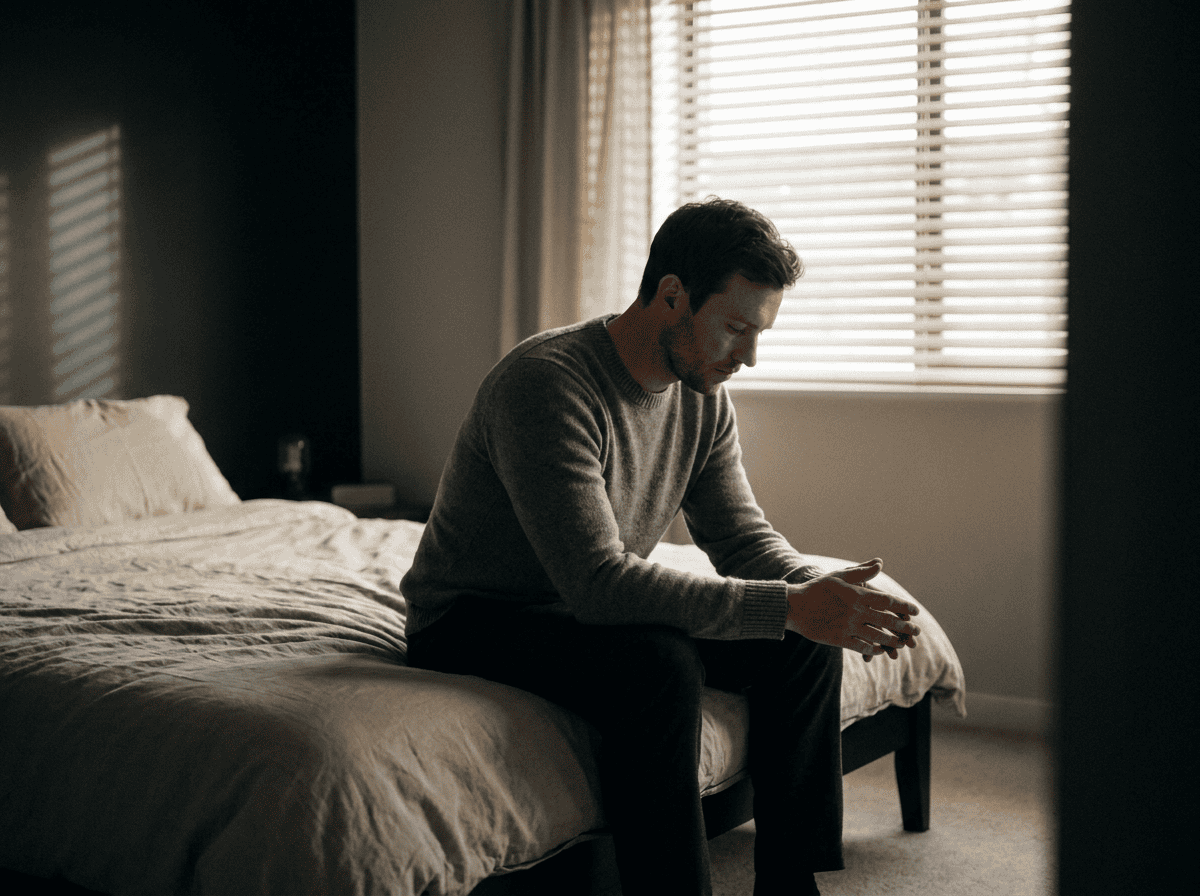
One of the most common things men notice during stressful periods is a change in erections.
Things may feel:
- less reliable
- less automatic
- more inconsistent
- harder to maintain
And for many men, that immediately creates concern.
You begin questioning:
- whether something physical is wrong
- whether testosterone has changed
- whether stress alone can really affect erections
- whether this is becoming permanent
Often, the most frustrating part is inconsistency.
You may still have:
- morning erections
- occasional strong erections
- periods where things feel normal
Which makes the situation even more confusing.
The important thing to understand is this:
Stress absolutely affects erections.
And not just psychologically.
Physically too.
Can stress cause erectile dysfunction?
Yes.
Stress can affect:
- blood flow
- nervous system regulation
- pelvic floor tension
- libido
- arousal
- confidence and performance
This does not mean symptoms are “imagined”.
It means the body responds physically to prolonged stress and pressure.
WHY MANY MEN MISUNDERSTAND STRESS-RELATED ERECTION CHANGES
One of the biggest misconceptions is:
“If stress is involved, then it must all be psychological.”
That is not how the body works.
Stress creates physical changes throughout the body.
Including:
- increased muscle tension
- shallower breathing
- nervous system activation
- altered blood flow regulation
- reduced recovery
And erections are extremely sensitive to all of these systems.
HOW ERECTIONS ACTUALLY WORK
To understand why stress matters, it helps to understand how erections happen.
Erections depend on coordination between:
- blood flow
- nerves
- pelvic floor muscles
- relaxation
- nervous system signalling
This system functions best when the body feels:
- safe
- relaxed
- calm
- receptive
Stress shifts the body in the opposite direction.
THE “FIGHT OR FLIGHT” RESPONSE
When stress levels increase, the nervous system becomes more alert.
This is often called:
“fight or flight”
The body prepares for:
- action
- protection
- survival
Which is useful in short bursts.
But problematic when it becomes chronic.
Because the body prioritises:
- tension
- vigilance
- protection
Rather than:
- relaxation
- recovery
- sexual function
Why does stress affect erections physically?
Stress may:
- reduce blood flow efficiency
- increase pelvic floor tension
- raise adrenaline levels
- alter breathing patterns
- increase nervous system activation
All of which can affect erection quality and consistency.
WHY THE PELVIC FLOOR BECOMES IMPORTANT
This is one of the most overlooked pieces of the puzzle.
When men experience prolonged stress, they often unconsciously increase muscular tension.
For many men, this tension accumulates in:
- the jaw
- shoulders
- lower back
- pelvic floor
Over time, the pelvic floor can become:
- overactive
- tight
- poorly coordinated
And because the pelvic floor influences:
- blood flow
- erection quality
- ejaculation
- nerve sensitivity
This can directly affect sexual function.
WHAT MOST MEN GET WRONG
Many men assume:
“If stress is causing this, I just need to relax.”
Unfortunately, it is rarely that simple.
Because once symptoms begin, men often start:
- monitoring erections
- anticipating problems
- worrying before intimacy
- checking performance constantly
At that point, the nervous system becomes even more activated.
Which reinforces the cycle.
THE PERFORMANCE ANXIETY LOOP
This is extremely common.
A man experiences:
- one inconsistent erection during a stressful period
This creates:
- concern
- increased awareness
- pressure to “make sure it works next time”
The next sexual experience now feels important.
That pressure increases:
- adrenaline
- muscular tension
- nervous system alertness
Which can make erections less reliable again.
And the cycle continues.
MYTH VS FACT
Myth:
“If stress affects erections, it means the problem is psychological.”
Fact:
Stress creates real physical changes involving:
- blood flow
- muscle tension
- nervous system activation
- pelvic floor behaviour
The effects are both physical and psychological.
Myth:
“Younger men should not experience stress-related ED.”
Fact:
Stress-related erectile dysfunction is increasingly common in younger men, particularly those:
- under chronic pressure
- working long hours
- constantly stimulated online
- struggling with anxiety or burnout
Myth:
“If erections are inconsistent, something must be permanently damaged.”
Fact:
Stress-related erection changes commonly fluctuate depending on:
- stress levels
- sleep
- confidence
- fatigue
- nervous system state
Fluctuation is often part of the pattern.
WHY MODERN LIFE MAKES THIS MORE COMMON
Today’s lifestyle creates several overlapping pressures:
- poor sleep
- constant stimulation
- work stress
- sedentary behaviour
- reduced recovery
- social media comparison
- performance pressure
The nervous system rarely fully switches off.
And sexual function suffers when the body remains in a prolonged stress state.
WHY MORNING ERECTIONS STILL MATTER
This confuses many men.
They may notice:
- weaker erections during intimacy BUT
- normal morning erections
This often indicates that the physical structures are still functioning.
And that:
- nervous system state
- stress
- pressure
- pelvic tension
May be strongly influencing performance during conscious situations.
Can men still have morning erections if stress is affecting performance?
Yes.
Morning erections often occur during deeper, relaxed sleep states.
Stress-related erection changes are commonly more noticeable during:
- conscious performance situations
- anxiety
- anticipation
- pressure
WHY CONSTANT CHECKING MAKES THINGS WORSE
This is particularly common with Alex-type personalities.
Many men begin:
- testing erections frequently
- analysing firmness
- comparing themselves online
- monitoring every sensation
This creates hypervigilance.
And hypervigilance increases nervous system activation.
This often worsens symptoms further.
THE ROLE OF SLEEP
Sleep is hugely important for:
- testosterone regulation
- nervous system recovery
- blood flow
- libido
- stress resilience
Poor sleep alone can significantly affect erections.
And many stressed men are sleeping far worse than they realise.
WHY QUICK FIXES OFTEN FAIL
This is important.
Many men try:
- supplements
- online hacks
- aggressive pelvic exercises
- constant self-testing
Without understanding:
- what is driving symptoms
- what is maintaining them
- how stress is affecting the body systemically
This often creates:
- more confusion
- more tension
- more frustration
WHAT WE SEE CONSISTENTLY
The men who usually improve are not necessarily the men who:
- eliminate all stress
- become perfectly confident overnight
- stop worrying immediately
They are usually the men who:
- understand what is happening
- stop catastrophising symptoms
- reduce nervous system overload
- address pelvic tension properly
- restore confidence gradually
That changes the trajectory significantly.
FAQ SECTION
Can stress alone cause erectile dysfunction?
Stress can absolutely contribute to erectile dysfunction.
But symptoms often involve:
- nervous system factors
- pelvic floor tension
- sleep disruption
- confidence changes
At the same time.
Is stress-related ED permanent?
In most cases, no.
Stress-related erection changes are often highly responsive once:
- nervous system overload reduces
- pelvic tension improves
- confidence returns
- recovery improves
Can pelvic floor tension cause erection problems?
Yes.
Overactive pelvic floor muscles can affect:
- blood flow
- nerve sensitivity
- erection quality
- ejaculation
This is increasingly common in stressed men.
Why do symptoms fluctuate so much?
Stress-related symptoms commonly vary depending on:
- sleep
- fatigue
- stress load
- confidence
- nervous system state
That inconsistency is often part of the pattern itself.
WHAT MOST MEN NEED TO UNDERSTAND EARLIER
Stress is not “just mental”.
The body reflects stress physically.
And sexual function is one of the systems most sensitive to:
- pressure
- tension
- poor recovery
- nervous system overload
The sooner men understand that, the less fear and confusion usually develop.
REASSURANCE: THIS IS COMMON AND UNDERSTANDABLE
Many men experiencing stress-related erection changes assume:
“I must be the only one dealing with this.”
In reality, this pattern is extremely common.
Particularly in:
- high-performing professionals
- younger stressed men
- men under prolonged pressure
- men who monitor symptoms heavily
The important thing is not to panic.
It is about understanding the system properly.
CALL TO ACTION
If you are experiencing erection changes during periods of stress and want a clearer understanding of what may be contributing to symptoms, the next step is not guessing.
It is clarity.
At Male Health Clinic, we take a structured and discreet approach to understanding:
- erection changes
- pelvic floor function
- nervous system factors
- stress and recovery
- confidence and performance concerns
So that you can better understand:
- what is driving symptoms
- what may be maintaining them
- and what to do next
No judgement.
No panic-based messaging.
Just a more intelligent and structured approach to male health.
NEXT STEP
If you would like to understand your symptoms more clearly and take a more proactive approach to recovery, you can contact:
Male Health Clinic
🌐 www.malehealthclinic.co.uk
📞 0115 775 5555