
Peyronie’s Disease vs a Normal Curve: How to Tell the Difference

Stephen Carter
First, Let’s Be Clear About One Thing
A curved penis is not automatically a problem.
In fact, many men naturally have a slight curve, and always have.
But here’s what most websites won’t say clearly:
👉 A curve that is new, worsening, painful, or interfering with sex is not considered normal.
Understanding that distinction is critical.
What Is a “Normal” Penile Curve?
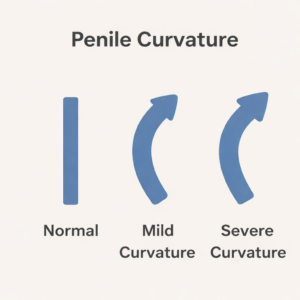
A natural curve:
- Is usually present from early adulthood
- Is typically mild (often less than ~20 degrees)
- Does not change over time
- Does not cause pain
- Does not interfere with sexual function
👉 Many men don’t even think about it. It’s simply how their body is.
What Is Peyronie’s Disease?
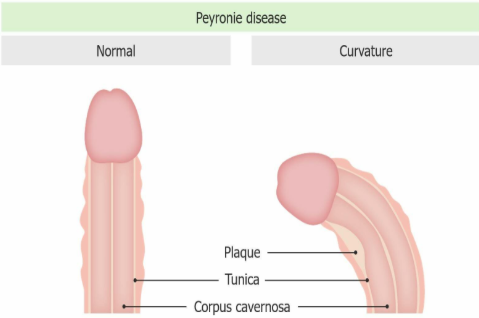
Peyronie’s disease is a medical condition where:
- Fibrous scar tissue (plaque) forms inside the penis
- This prevents normal stretching during an erection
- Leading to curvature, deformity, or shortening
It is not just a cosmetic issue — it can affect:
- Erections
- Sexual function
- Confidence and mental health
The Key Difference (Most Important Section)
Here’s the simplest way to think about it:
| Feature | Normal Curve | Peyronie’s Disease |
|---|---|---|
| When it started | Always been there | New or recently developed |
| Change over time | Stable | Getting worse or evolving |
| Pain | None | Often painful (especially early) |
| Shape | Smooth curve | Sharp bend, kink, or indentation |
👉 If your curve has changed, that is the biggest red flag.
How to Tell the Difference
If you’re unsure, ask yourself honestly:
⚠️ Strong signs it could be Peyronie’s:
- The curve wasn’t there before
- It has developed over months
- You feel a lump or hard area (plaque)
- Erections are painful
- The penis has developed:
- A kink
- An hourglass shape
- A noticeable shortening
- Sex has become difficult or uncomfortable
👉 If you tick even one or two of these, it’s worth getting assessed.
What Causes Peyronie’s Disease?
The exact cause isn’t always clear, but it is commonly linked to:
- Micro-injury during sex or activity
- Repeated minor trauma over time
- Genetic predisposition
- Age-related tissue changes
Important truth:
👉 Many men don’t remember a specific injury, and that’s normal.
The Stage Most Men Miss
Peyronie’s often has two phases:
1. Active (early) phase
- Painful erections
- Curve developing or worsening
- Scar tissue forming
2. Stable phase
- Pain settles
- Curve stops progressing
- Deformity remains
👉 This matters because early-stage intervention is often more effective.
Most men wait until it stabilises, and by then, options can be more limited.
When Should You See a Specialist?
Be direct with yourself here.
You should seek medical advice if:
- The curve is new or changing
- There is pain during erections
- You notice a lump or indentation
- It is affecting sex or confidence
👉 Waiting “to see if it improves” is one of the most common mistakes.
What About Treatment?
Treatment depends on:
- Stage of the condition
- Severity
- Symptoms
At a specialist male health clinic, options may include:
- Monitoring (in mild, stable cases)
- Medical therapies
- Non-invasive approaches such as focused shockwave therapy
- In advanced cases, surgical options
Important clarification:
👉 No treatment is “one-size-fits-all”, and not every curve needs treatment.
A Final Word
Many men delay seeking help because they:
- Feel embarrassed
- Assume it’s “normal”
- Hope it will go away
But here’s the reality:
👉 Peyronie’s disease does not usually resolve on its own once established.
And the longer it progresses untreated:
- The more difficult it can be to manage
- The more impact it can have physically and psychologically
If You’re Unsure, Do This
If you’ve read this and are still unsure:
- Take note of changes over time
- Check for pain or palpable plaque
- Consider whether it’s affecting your life
👉 And if there’s any doubt, get a professional assessment.
Medical Disclaimer
This article is for educational purposes only and does not replace a medical diagnosis. If you are concerned about symptoms of Peyronie’s disease or changes in penile curvature, you should consult a qualified healthcare professional.